Bull of Pope Clement VII Regulating the Lirey Shroud Exhibitions
Bull of Pope Clement VII Regulating the Lirey Shroud Exhibitions
Issued January 6, 1390
Vatican Archive, Registra Avenionensia 261, folio 258v.
Translated by Jason Colavito from Chevalier, Autour des Origines, pp. 33-35.
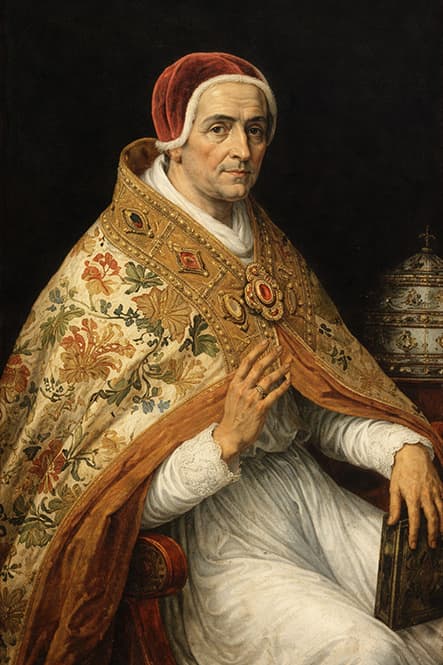
Clement [VII], etc., for perpetual remembrance.
The careful foresight of the Apostolic See sometimes modifies concessions once made, and sets forth and arranges matters as the character of things and times requires, and as it sees to be expedient in the Lord.
For formerly, on the part of our beloved son, the nobleman Geoffrey, lord of Lirey, of the diocese of Troyes, it was set before us that, not long ago, our beloved son Peter, presbyter cardinal of the title of Saint Susanna, had been informed on Geoffrey’s behalf that once Geoffrey’s father, inflamed with zeal of devotion, had caused a certain image or representation of the Shroud of our Lord Jesus Christ, which had been freely given to him, to be reverently set up in the church of Blessed Mary at Lirey in the said diocese, of which he himself was the founder. Afterwards, when by God’s permission those parts had been sorely troubled by wars and plagues of pestilence, that image or representation, at the command of the ordinary of the place and for other definite reasons, was transferred from the said church of Blessed Mary to another safer place, where it was honorably kept and reverently guarded until then.
But Geoffrey desired, for the adornment of that same church, for the increase of the devotion of the people, and for the fostering of divine worship, that the aforesaid image or representation might be replaced in the same church. The said cardinal, whom at that time we had sent to our dearest son in Christ, Charles, the illustrious king of the French, for certain matters concerning us and the Roman Church, and to whom, during the prosecution of those affairs, we had granted full faculty to perform, manage, and execute within the cities, dioceses, and provinces through which he might pass and in which he might sojourn on his journey, all things which a cardinal of the Roman Church acting in the office of legate could do within the limits of his legation, this cardinal, passing through the province of Sens (in which the diocese of Troyes lies), granted by his letters to the said Geoffrey that he might have the said image or representation placed and set in a fitting, honorable, and decent spot in the church of Saint Mary aforesaid, without having sought or obtained the license of the diocesan or of any other whatsoever.
And the said image or representation, by virtue of that indulgence, was accordingly decently restored in the said church of Blessed Mary.
But afterwards our venerable brother Peter, bishop of Troyes, moved by that indulgence, in his last synod prohibited the rectors of parish churches, and those appointed to preach the word of God, from making any mention, in their churches or sermons, either in praise or in blame, of the Shroud of Jesus Christ or of the image or representation thereof. And finally, he forbade the dean of the said church of Blessed Mary, under pain of excommunication, to show that image or representation to anyone. From which prohibition the said dean appealed to the Apostolic See. And because after that appeal the said image or representation was publicly displayed and shown to the people, we confirmed the aforesaid indulgence, of our certain knowledge and apostolic authority. Moreover, we granted to the same dean and to the chapter of the said church of Blessed Mary that, notwithstanding the aforesaid prohibition, they might lawfully show and cause to be shown publicly to the people the said image or representation whenever it should be opportune, imposing perpetual silence upon the said bishop with regard to that prohibition, as is more fully contained in our letters then issued.
We therefore, taking care to provide a suitable remedy concerning the manner of such display, so as to remove all occasion of error and idolatry, will and by the tenor of these presents we decree and also ordain by apostolic authority, that whenever in future the said image or representation shall happen to be shown to the people, the dean and the aforesaid chapter, and other ecclesiastical persons showing that image or representation or being present at such showing, shall not on that account put on copes, surplices, albs, copes, or any other ecclesiastical vestments or ornaments whatsoever, nor make any solemnities such as are customary in the showing of relics; nor shall torches, flambeaux, or candles be lit, nor any lights of any kind be used there.
And that the person showing the said image, when a greater multitude of people is gathered there, shall publicly preach to the people and say in a loud and intelligible voice, without fraud, that the said image or representation is not the true Shroud of our Lord Jesus Christ, but is a certain painting or picture made in the likeness or representation of the Shroud, which is said to have been that of our Lord Jesus Christ.
And we decree that, if our aforesaid letters and their effect, and this our will, statute, ordinance, and constitution, are not observed, they shall lack all force.
Let no one, therefore, etc. infringe this page of our will, statute, ordinance, and constitution, etc.
Given at Avignon, on the eighth day before the Ides of January, in the twelfth year [of our pontificate]. Registered on the eighth day before the Ides of February, in the year 12.
VATICAN ARCHIVE, Registra Avenionensia 261, folio 258v.
Sources & References
- Vatican Archive, Registra Avenionensia 261, folio 258v.
- Translated by Jason Colavito from Chevalier, Autour des Origines, pp. 33-35.