Nicole Oresme, Problemata 1 (c. 1370 CE)
Nicole Oresme (c. 1320-1382) was a Norman scholar whose career bridged the University of Paris, the royal court of France, and the senior clergy. Trained as a theologian and active as a philosopher and mathematician, he became one of the most influential intellectuals of the 14th century. He served the future Charles V from 1362 until his death, held church offices at Rouen and Paris, and was elected bishop of Lisieux in 1377, then consecrated in 1378.
Oresme is remembered for bringing careful reasoning to questions that were often handled by appeal to authority or popular rumor. He wrote across natural philosophy, politics, and theology, and he is especially notable for insisting that claims about the world should be weighed by the quality of the testimony behind them, not merely by who repeats them.
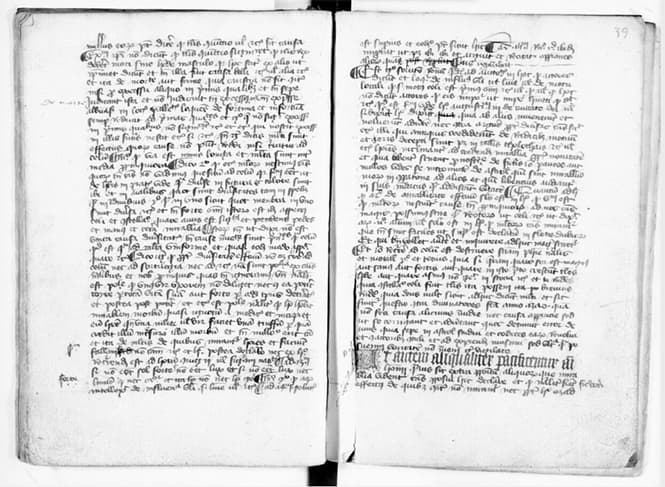
That habit of mind matters for a small, now-famous remark he made about the Shroud of Turin’s earliest known period in France. In a treatise on “mirabilia” (puzzling or unexplained phenomena), preserved alongside his Questio contra divinatores in a Paris manuscript dated 1370, Oresme referenced a church in Champagne (the Lirey church) that claimed to possess “the shroud of our Lord Jesus Christ,” and treated it as a clear example of clerical deception used to draw offerings.
The key passage
Oresme’s remark is brief but pointed. In context, his point is not a technical analysis of the Shroud’s material or imagery, but an argument about credibility: he cautions readers against accepting miracle reports simply because they are reported by churchmen, since some clergy fabricate wonders to benefit their churches, and he flags the Champagne “shroud” claim as an obvious case.
For miracles are not performed so that we may become evil, but so that we may become good.
In response to the argument on the contrary, namely from common report that it is so, note one thing carefully: I have often heard many things said by the common people to be true and universally known among all, so much so that I scarcely dared to say the opposite. And when I inquired further, “How do you know this?” each person answered, “Everyone knows this.” And when I pressed further, “Did you see it?” he replied, “No.” […] And in this not only is the simple populace deceived, but even great clerics, who often say, “This is a matter of common notoriety.” And yet, if you ask them, “How do you know this?” they will answer no more than a simple woman.
Now, if two good people were to testify that they had suddenly been cured by such-and-such a deed or event, must I therefore believe them? […] To the sixth objection, I say first that if good people should say such a thing and attribute it to a miracle and to the glorious God, this is not against reason, as I have already said.
But the reason why this was permitted is not hidden in Holy Scripture.
It is not necessary for me to believe every person who says: “So-and-so worked such a miracle for me.” For in this way many clerics would deceive others, so that offerings might be brought to their churches. This is plainly evident in the case of the church in Champagne, where it was said that the Shroud of the Lord Jesus Christ was kept, and of nearly countless others who fabricated such things, and so forth.
Why it matters
Historically, the value of this passage is chronological and cultural. It places written, elite skepticism about the Lirey relic earlier than the well-known 1389-1390 dispute associated with Bishop Pierre d’Arcis, showing that criticism was already in circulation in educated circles before the end of the 14th century. It also suggests the Lirey object was already notorious enough to function as an example in a broader discussion about rumor, testimony, and fraud.
The parallel with d’Arcis’s 1389 memorandum to Pope Clement VII is striking. D’Arcis also accused the Lirey clergy of staging fake miracles, specifically claiming the dean and canons hired people to pretend they were cured by the Shroud, all to attract pilgrims and their offerings. Oresme’s earlier remark suggests this accusation was not an invention of d’Arcis but reflected a broader awareness that deceptive practices were already associated with the Lirey relic.
Sources & References
- Arlima. Nicole Oresme. Archives de litterature du Moyen Age. View source →
- Stanford Encyclopedia of Philosophy. Nicole Oresme. View source →
- Sarzeaud, N. (2025). A New Document on the Appearance of the Shroud of Turin from Nicole Oresme: Fighting False Relics and False Rumours in the Fourteenth Century. View source →